Architecture and Design Museum Helsinki
フィンランド、ヘルシンキ市, 2024
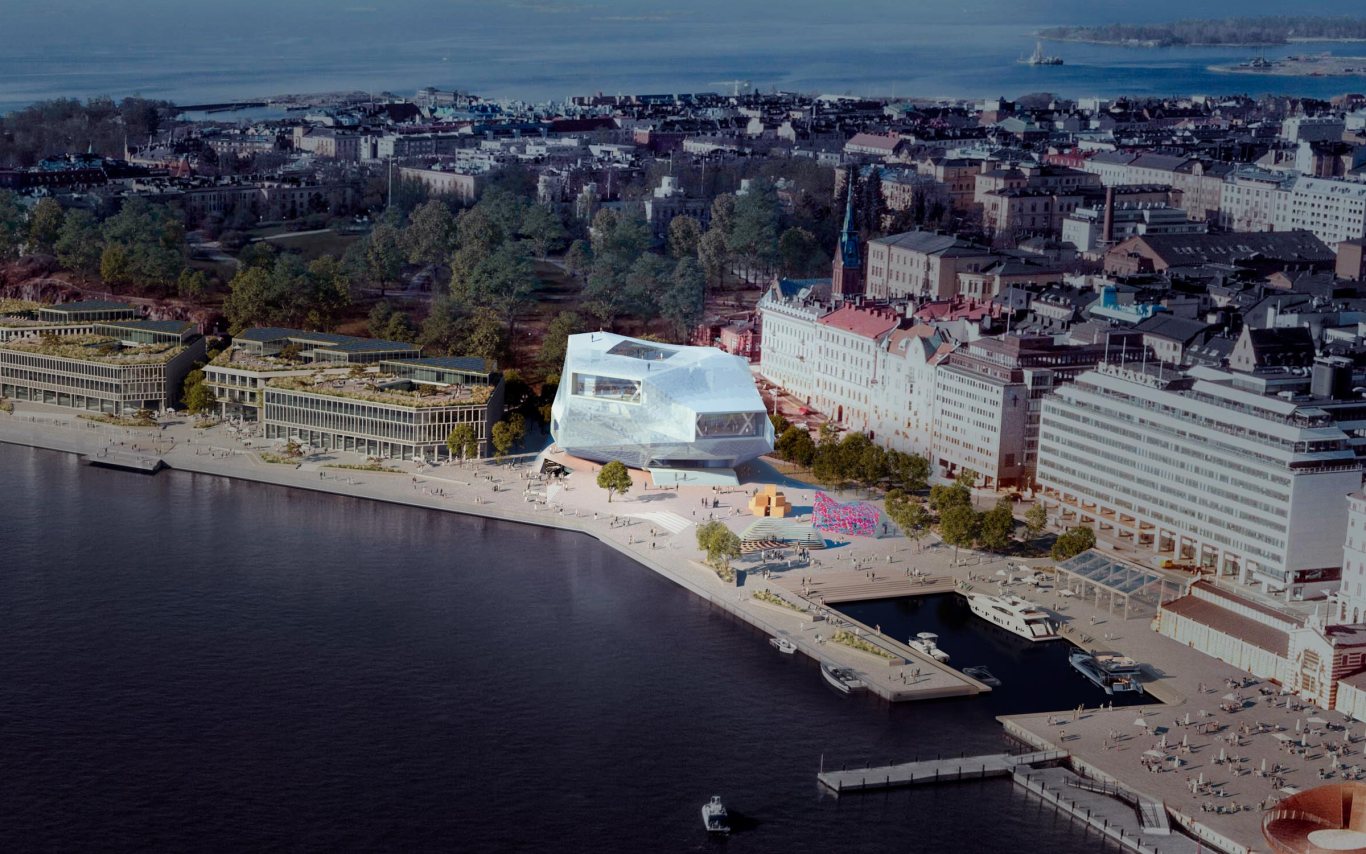
In the decade after its citizens rejected the idea of a new Guggenheim in Helsinki, the city went on to devise a masterplan on the same site. For the most prominent location of this masterplan the city envisioned a new Architecture and Design Museum (ADM) and organised an international competition in 2024.
Exhibit Nr. 1
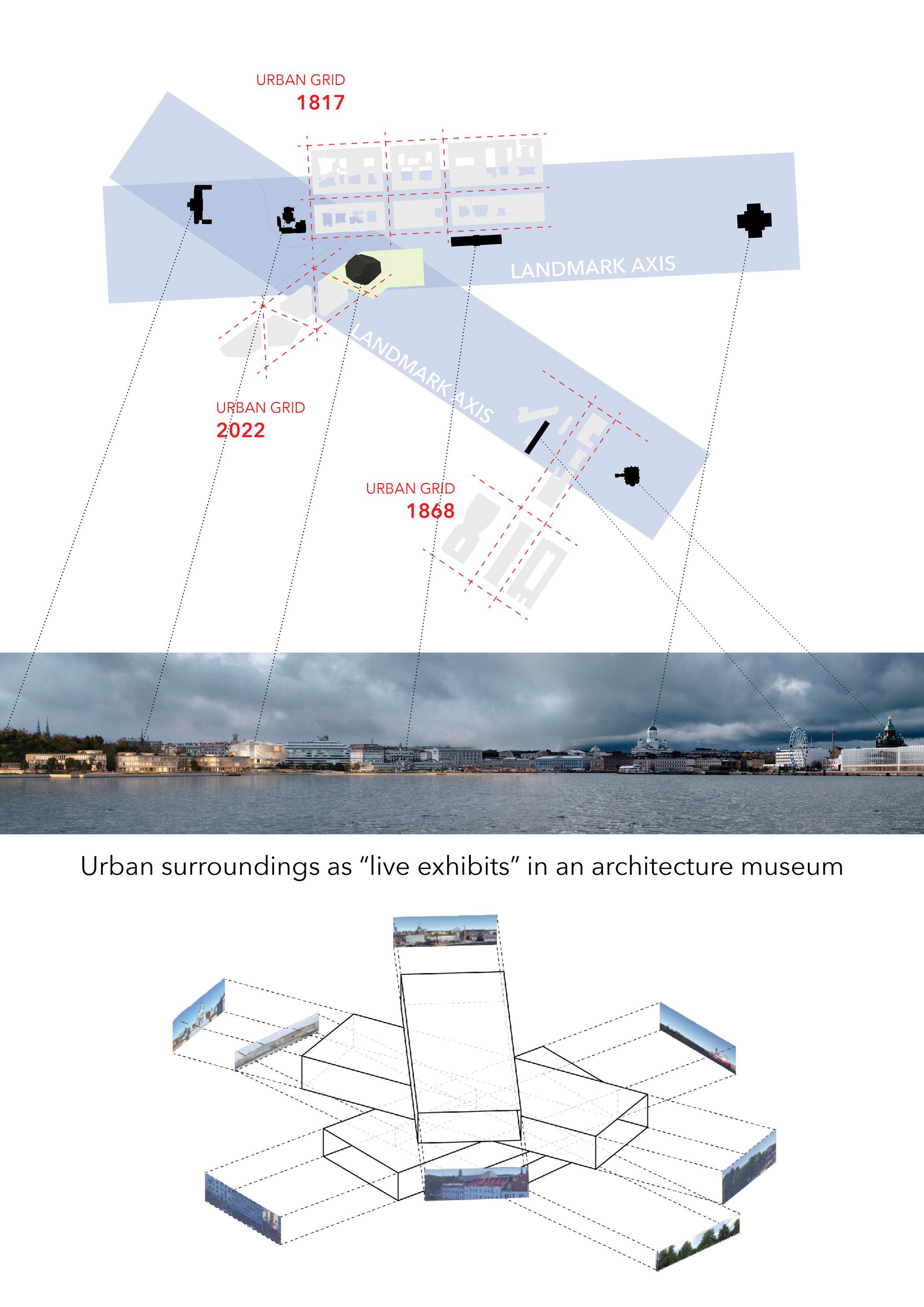
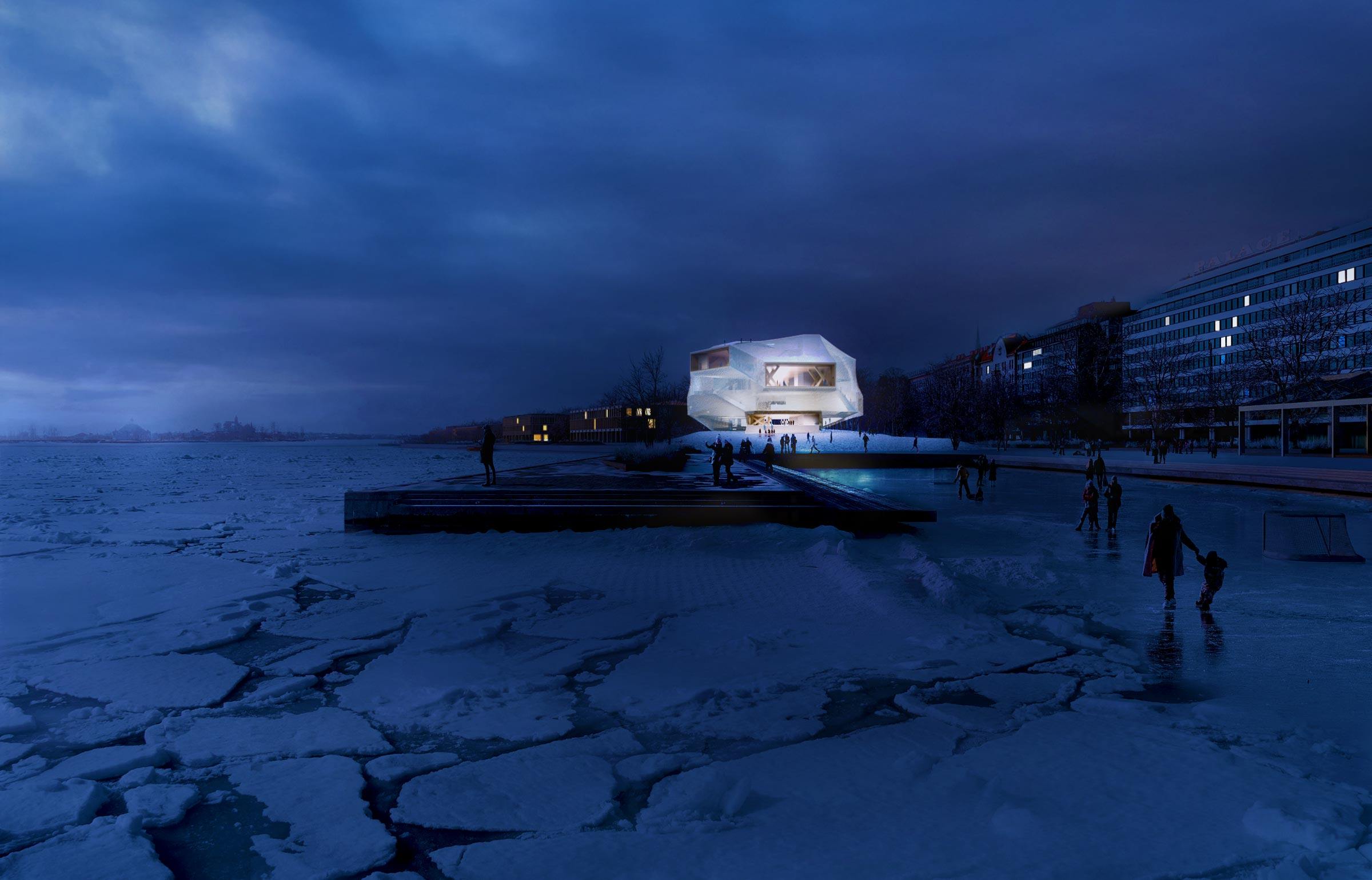
The site is at the southwestern corner of the South Harbour, where the lines of sight to some of Helsinki’s most iconic landmarks and the urban grids of three epochs meet. In becoming exhibit number 1 itself (“a Museum of Architecture”), the ADM must show the perhaps single most important role of a museum: to connect.
Urban playground
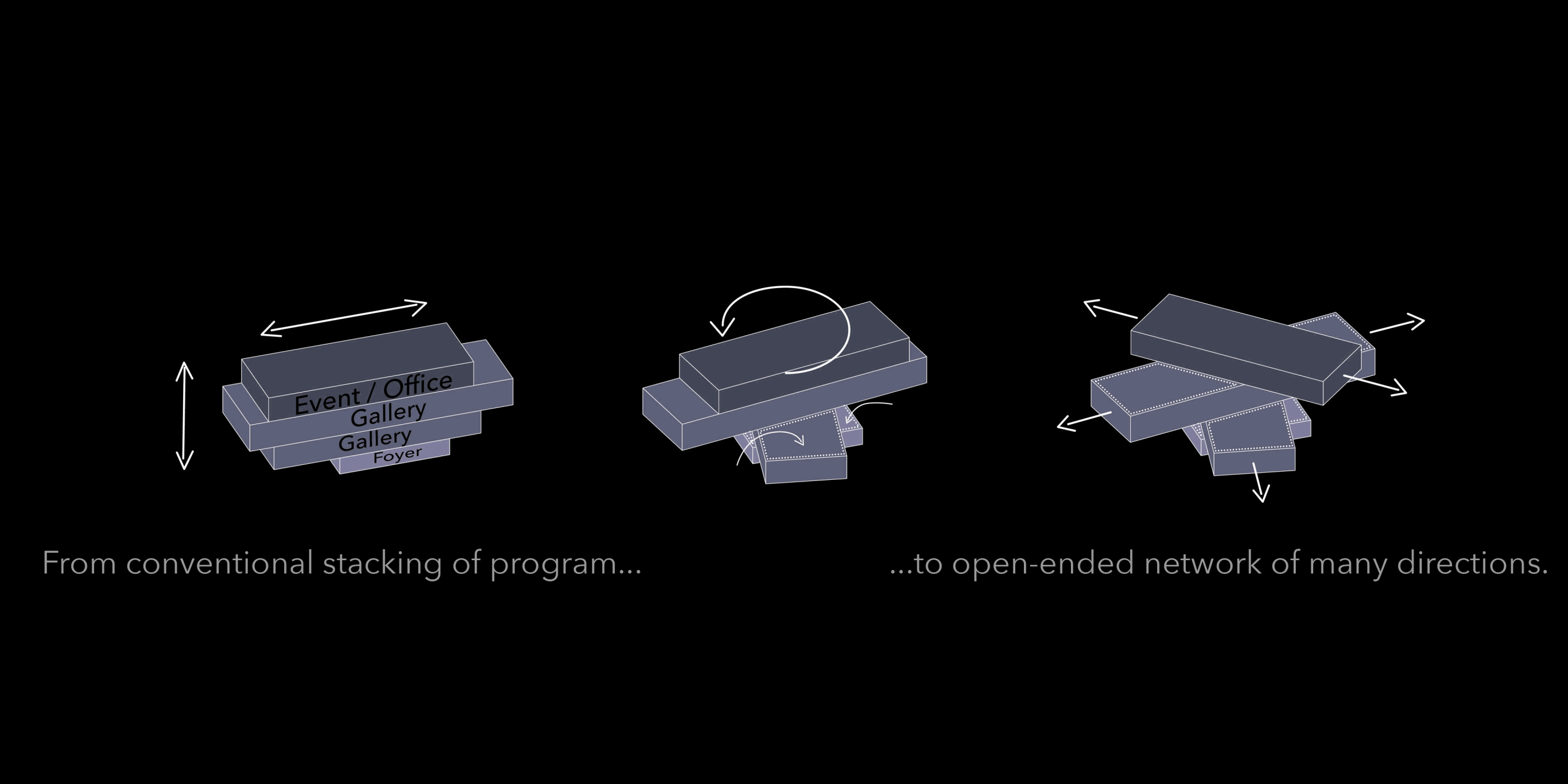
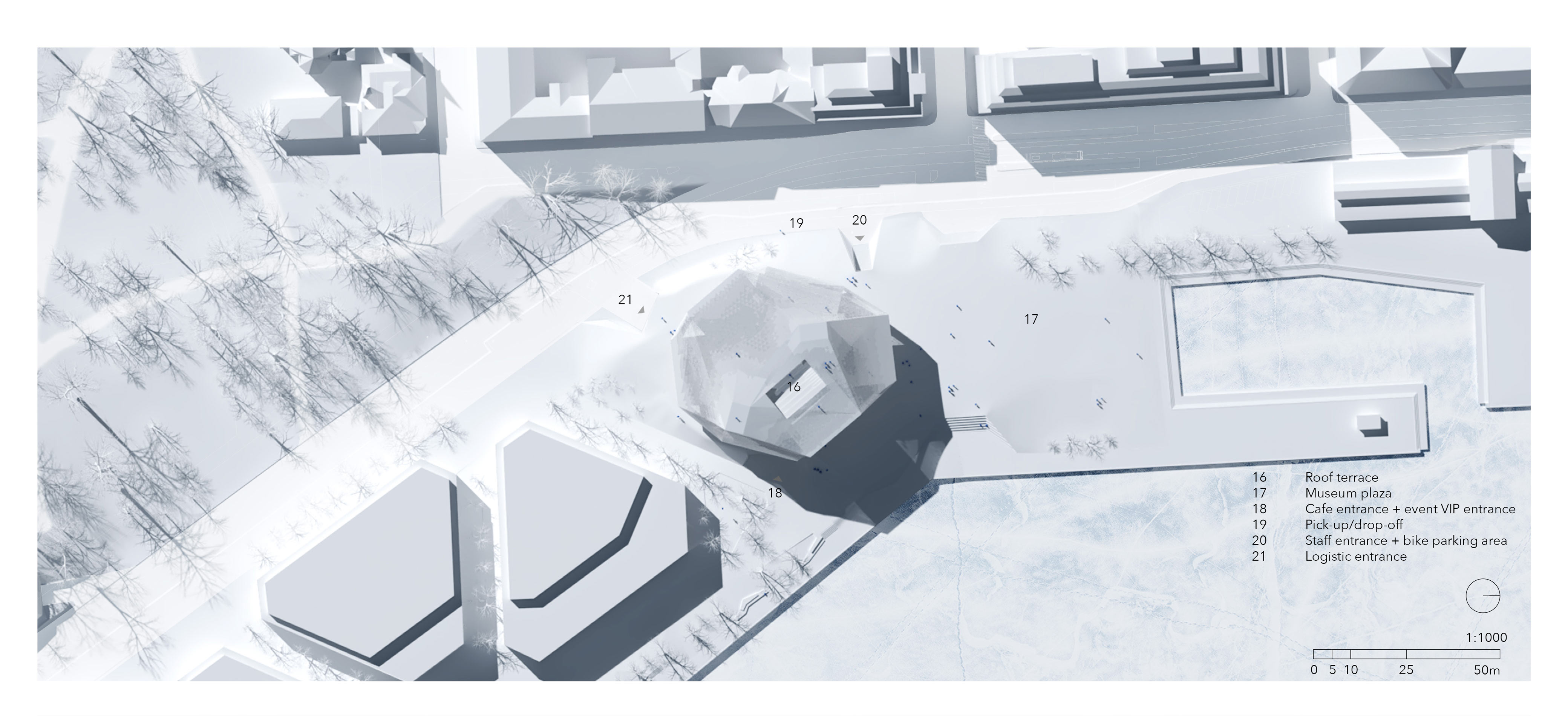
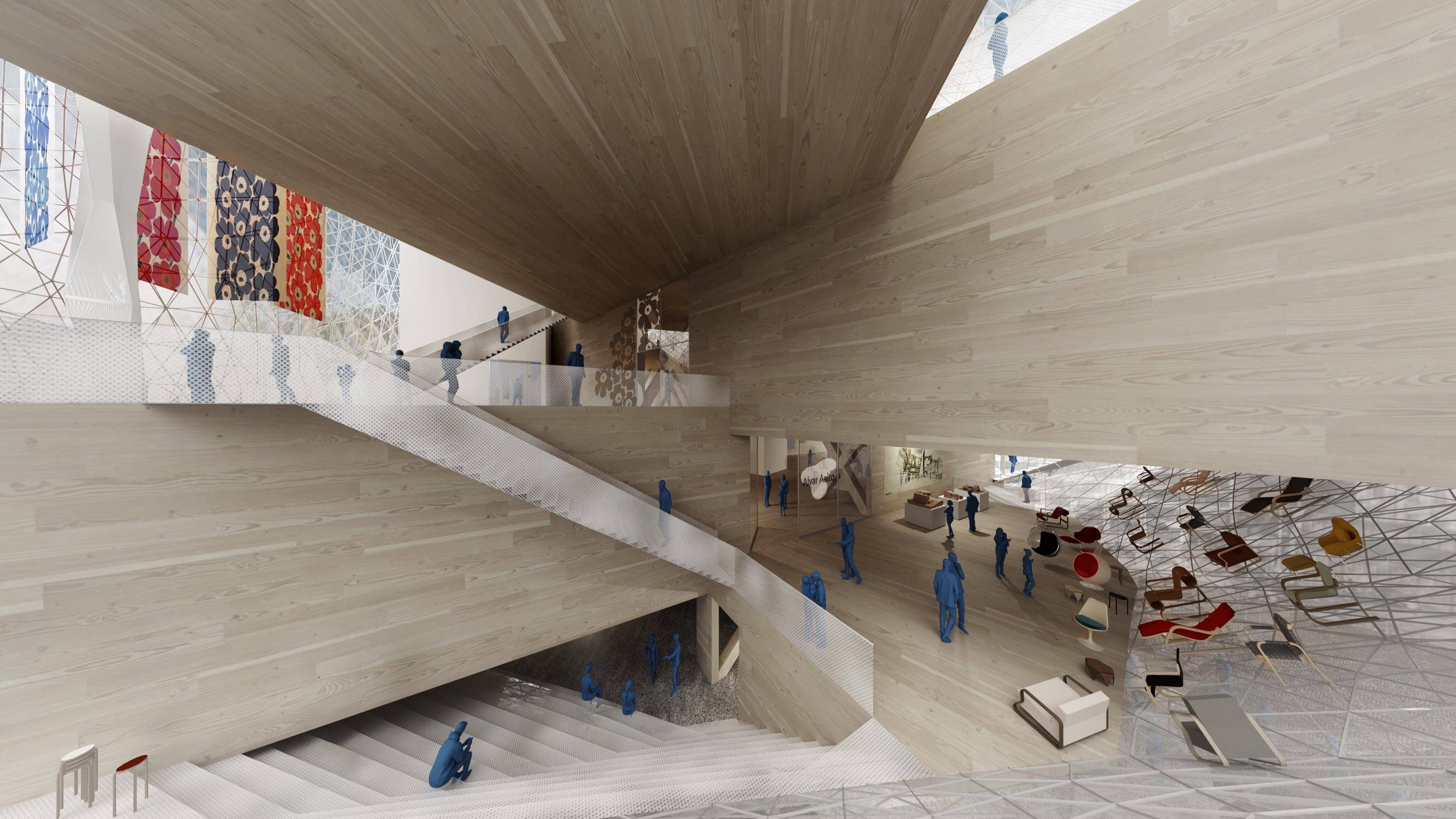
The ADM reaches out in many directions. It has no ‘front’ vs ‘back’. Rather than a ‘museum as institution’, the ADM presents architecture in and as an urban playground for all where architecture and design are not merely displayed but actively engaged with.
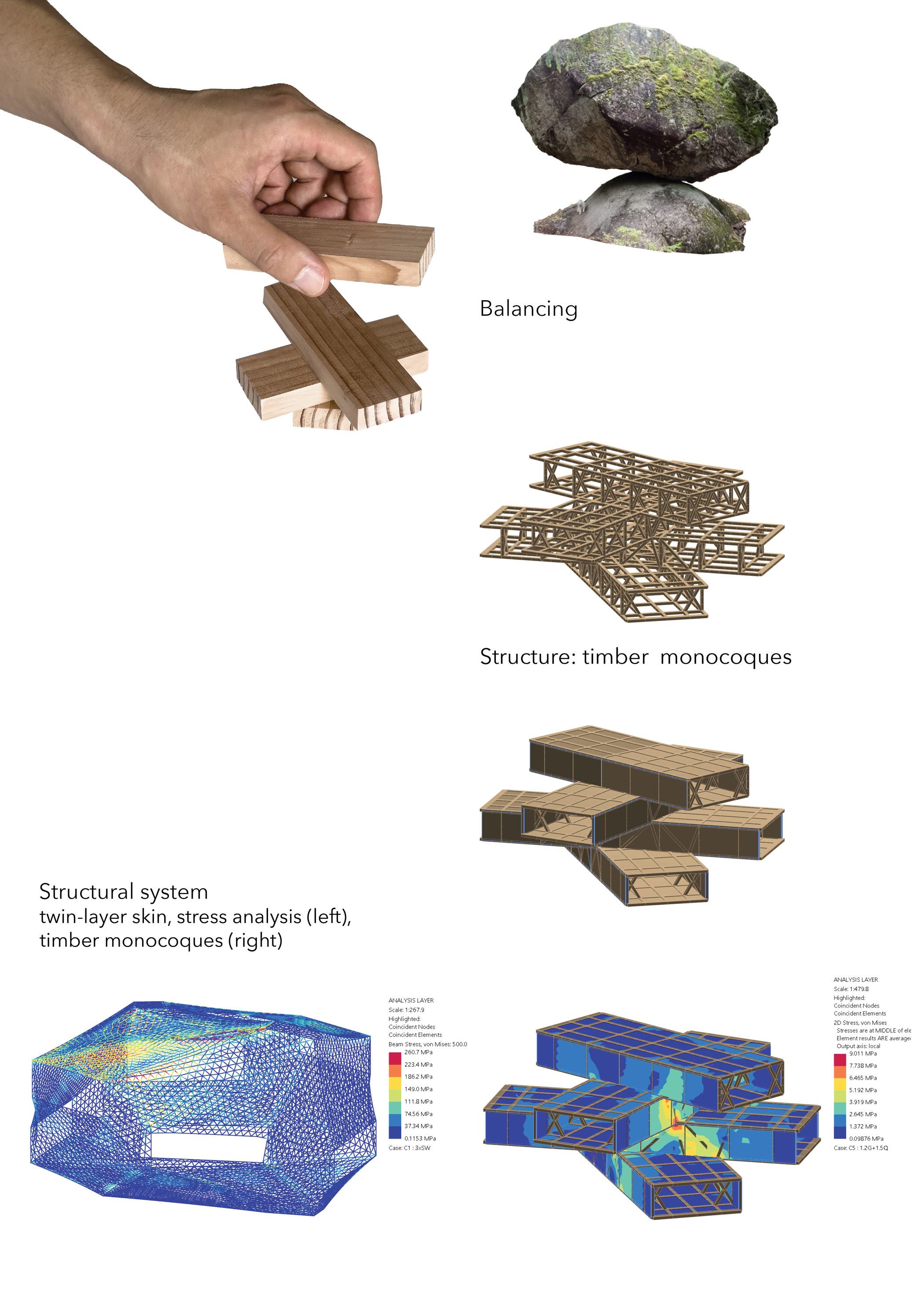
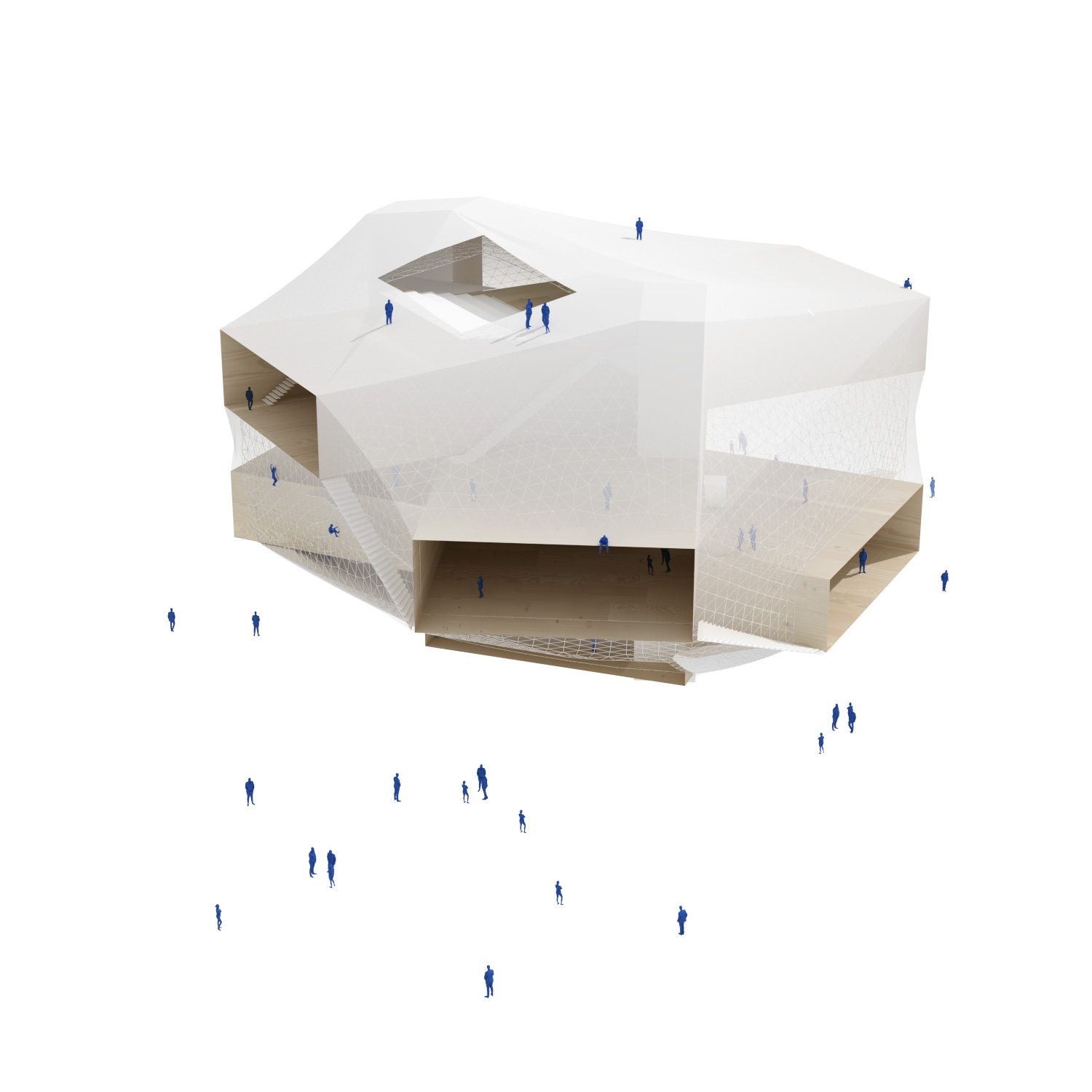
Reminding of Finland’s famous balancing rock Kummakivi in Ruokolahti, the ADM has a strange aura of contradictions. While it asserts itself as a matter-of-course, it remains fragile. The ADM is both in balance and in motion, both heavy and light at the same time, evoking curiosity in passers-by. Helsinki’s new Kummakivi barely touches the ground. Its urban surroundings freely flow in and out.
Process
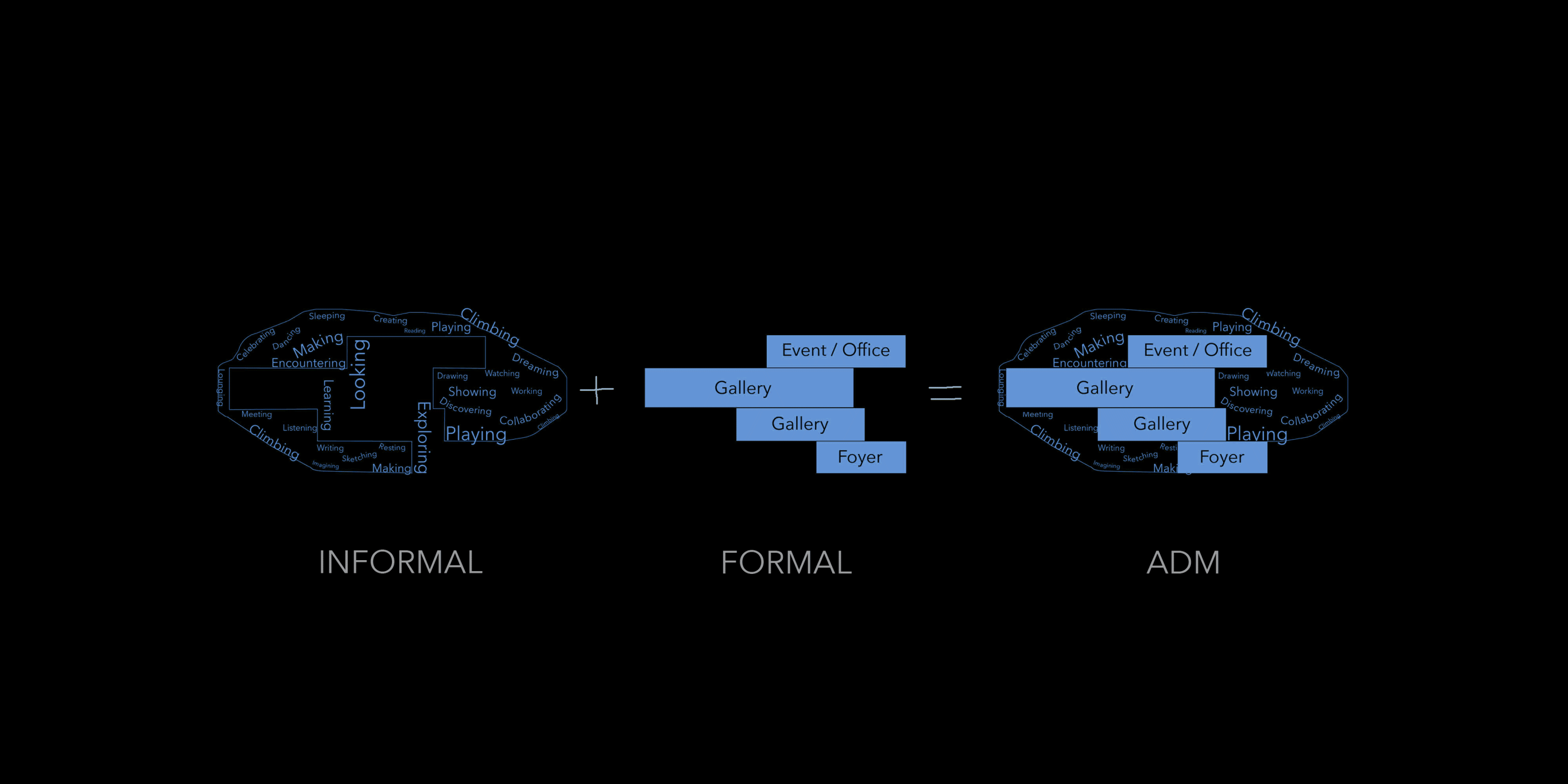
Where the Kummakivi in Ruokolahti was formed over hundreds of years by natural forces, the ADM is formed in a process responding to natural conditions and programmatic criteria. Working with and rewriting the program of a museum, feedback loops engaging several disciplines lead to an optimum balance between structural, environmental, and energetic constraints:
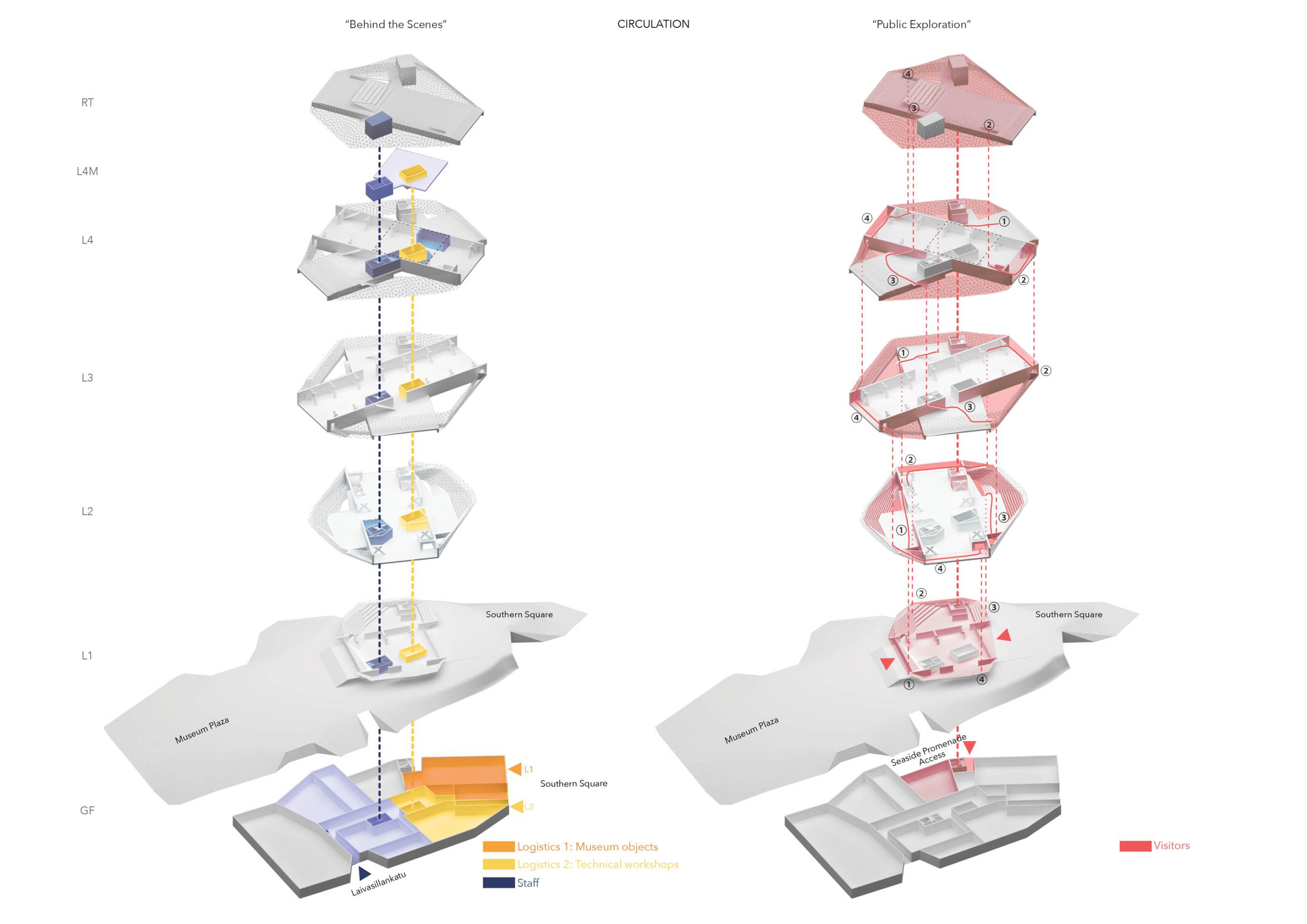
Structure: Stacked timber monocoques form a network of compression, surrounded by a soft
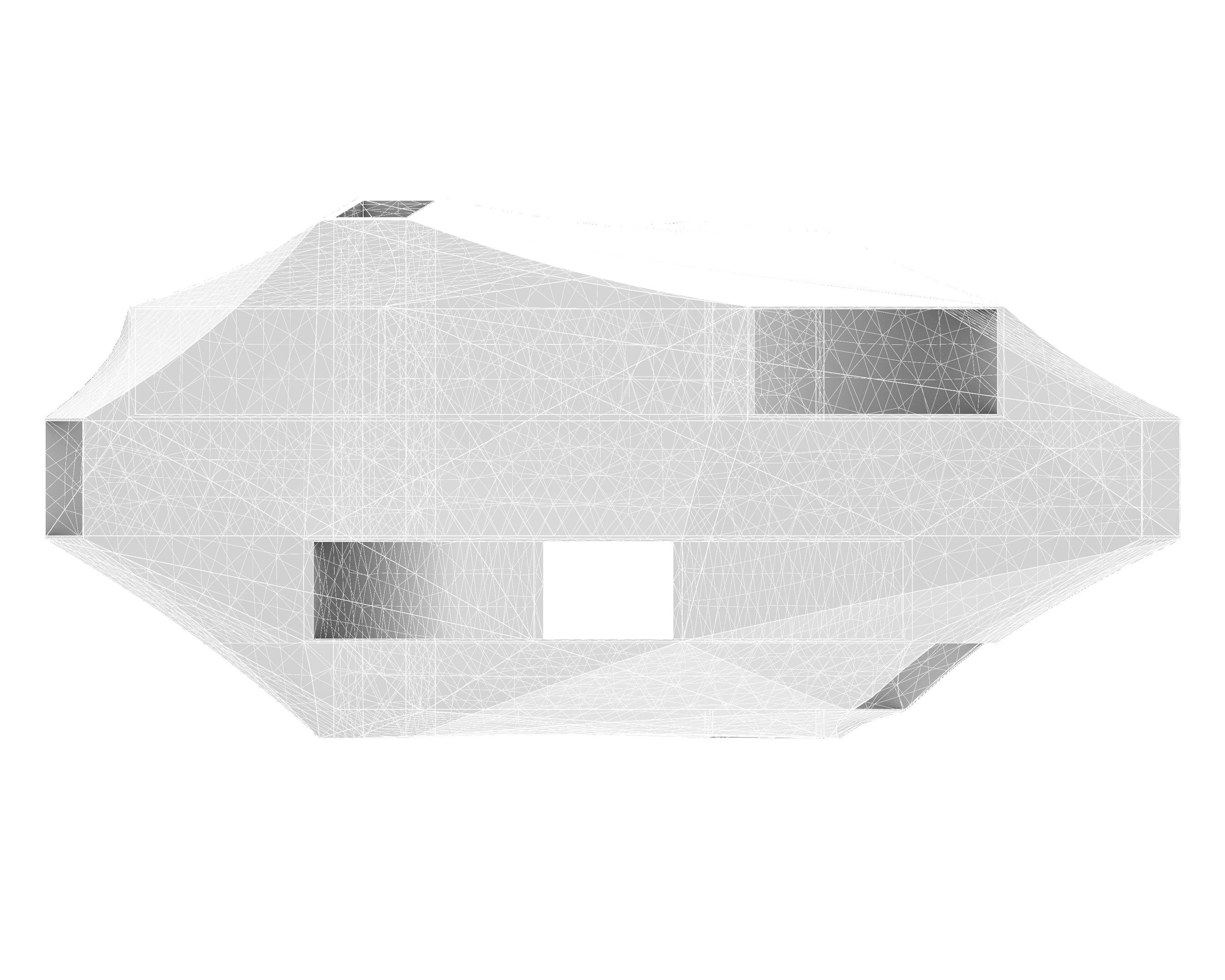
External skin: A translucent twin-layer diagrid structure spans between the ends of the timber boxes. Its form is derived from optimisation processes to minimise wind, snow, and seismic loads on the overall structure.
Climate: Variable climates are found throughout the building. The outside façade acts as a microclimate modifier, creating an informal exploration space that responds to the unique Finnish external environment. The gallery spaces inside the timber boxes are super-insulated. The overall building form is compact: material efforts can be kept to the minimum.
Informal Formal
As the external skin finds its form by connecting the corners of the inner structure’s monocoques, an intricate space of ever-changing depths evolves. This simple gesture of stacked wood blocks wrapped by a continuous space generates a balance between zones of clear definition and spatial ambiguity ready to adapt for, or even trigger, new programs. As the level of transparency changes with the two layers of the diagrid skin, the inside of the ADM is visible yet never fully revealed. One has to walk around, approach, change view angles, explore Helsinki’s new Kummakivi. Where the formal and informal coexist in an interdependent network, architecture unfolds in unexpected encounters and adventures.
フィンランド、ヘルシンキ市, 2024
Type
Status
Team
フロリアン ブッシュ, 宮崎佐知子, ヨアキム ナイス, 黃䕒慜, 島玲旺, 大澤祐太朗, 陈一禾 (研修生), トゥグラ アゴリクリ (研修生), 胡淳銦 (研修生)
構造: ARUP
環境: ARUP
設備: ARUP
ライティング・デザイン: ARUP
Size
延床面積: 7,890 m²
Structure
関連プロジェクト:
- バーチカル・ランドスケープ, 2015—2027
- Architecture and Design Museum Helsinki, 2024
- I'T, 2019
- カウナス・サイエンス・アイランド, 2016
- リマ市立美術館, 2016
- K8, 2014—2015
- デトロイト・高架橋・ギャラリー, 2014
- ハンガリー音楽博物館, 2014
- グッゲンハイム・ヘルシンキ, 2014
- 太田市文化交流施設, 2014
- 台中市立文化センター, 2013
- ベルリン未来館, 2012
- 東京デザイナーズウィーク アート・ギャラリー, 2011
- 東京・デザイン・ウイーク, 2011
- RG プロジェクト, 2009
- 東京・ベルリン|ベルリン・東京, 2006